Real projects with complete generator solutions
In April 2025, a blackout across Spain and Portugal cut power to millions within seconds, after the Spanish system lost around 15 GW in about five seconds and the Iberian grid separated from the rest of Europe. During the 2025 summer heatwave, grid operators leaned heavily on backup generation to keep systems balanced. Aging infrastructure, extreme weather, and a generation mix that is shifting quickly toward solar and wind all add stress. The pattern is consistent: outages are becoming more frequent, and grid upgrades are not keeping pace.
Wroclaw is one of Poland's largest logistics regions, and a cold-storage operator there could not risk losing temperature control over stored food during a grid outage.
Leipzig has grown into an active colocation market, and a Tier III operator there needed guaranteed standby power to hold the uptime it promises its clients.
The loss is almost never the electricity. It is what the electricity was protecting: cold storage - a few hours without refrigeration can spoil an entire warehouse of stock; manufacturing - a voltage dip in the middle of a cycle can scrap a batch and force a restart; data centers - minutes of downtime can breach client agreements and trigger penalties, on top of the damage to reputation; healthcare - loss of power to critical areas is a patient-safety issue, not just a financial one; ports and logistics - refrigerated cargo and handling stop, and the cold chain breaks.
The Aktobe region is a center of chromite and ferroalloy work, where processing sites often sit far from a stable grid and cannot afford unplanned stops.
Add up the equipment that genuinely has to stay powered, and separate the critical loads from the ones you can drop during an outage. Pay attention to starting currents: motors, compressors and pumps can pull several times their running current for a moment when they start, and the generator has to cover that peak, not just the steady load.
Standby is for sites with a reliable grid, where the generator only runs during outages. It handles a variable load for a limited number of hours per year. This is the usual choice for offices, clinics, data centers and warehouses, where the grid does the daily work and the set is there for emergencies.
kVA is apparent power and kW is real, usable power. They are linked by the power factor, typically 0.8 for a genset, so an 800 kVA set delivers roughly 640 kW. Always size to the kW your load actually draws, not to the larger kVA headline.
Plovdiv is Bulgaria's manufacturing heartland, and a plastics producer there was losing batches whenever voltage dips interrupted its injection molding cycles.
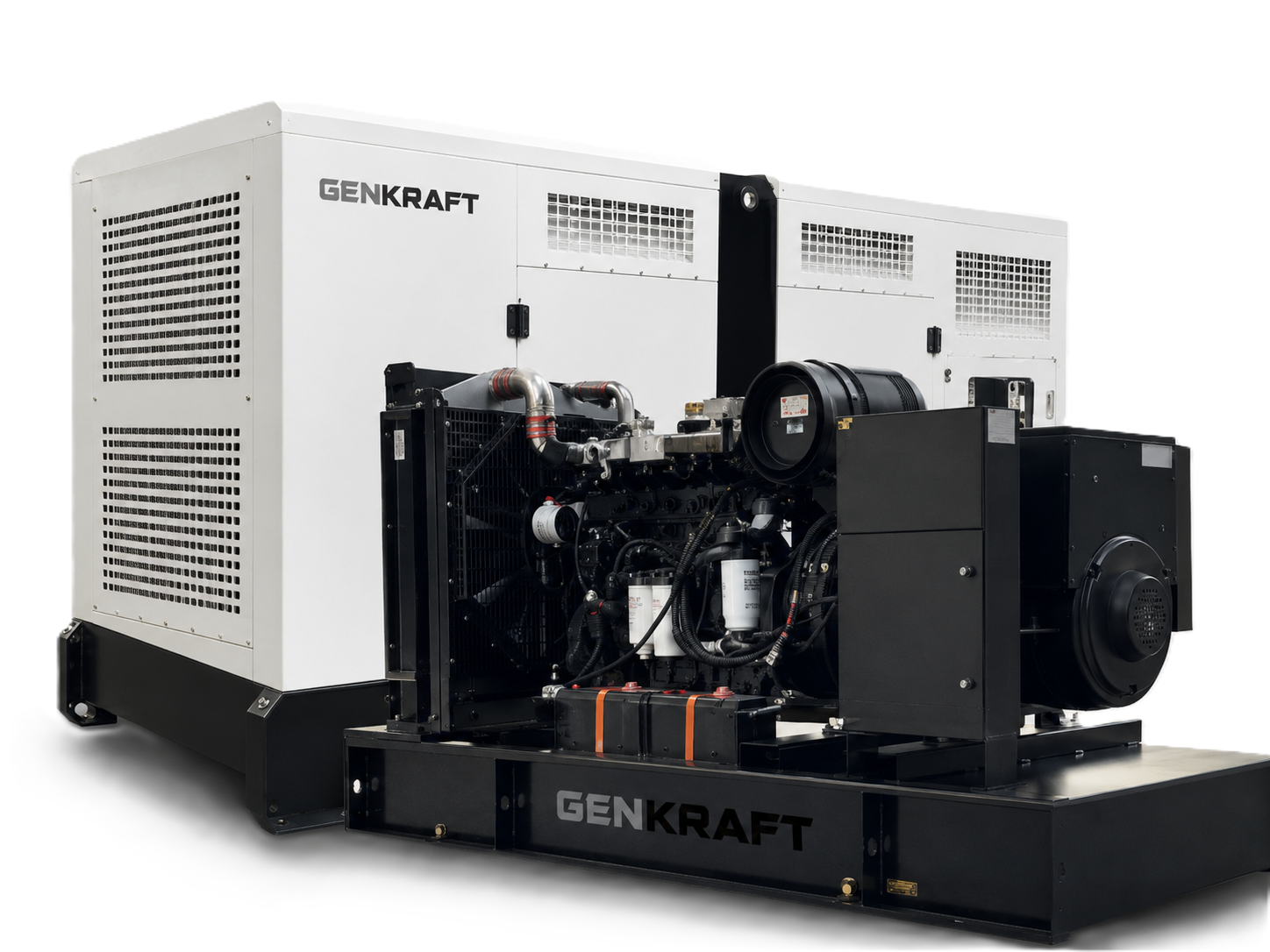
A generator needs a stable, level base that can carry its weight and contain any fuel or oil. Outdoors in a weatherproof canopy or indoors in a dedicated room both work, as long as there is room around the set for airflow, service access and safe exhaust routing. Keep it clear of windows, air intakes and occupied spaces that exhaust fumes could reach.
Gdansk is the Baltic's main deepwater container gateway, where refrigerated containers waiting on the quay have to stay powered without interruption.
A private clinic in Timisoara needed dependable backup for its critical rooms and equipment, with quiet running suitable for a setting full of patients.
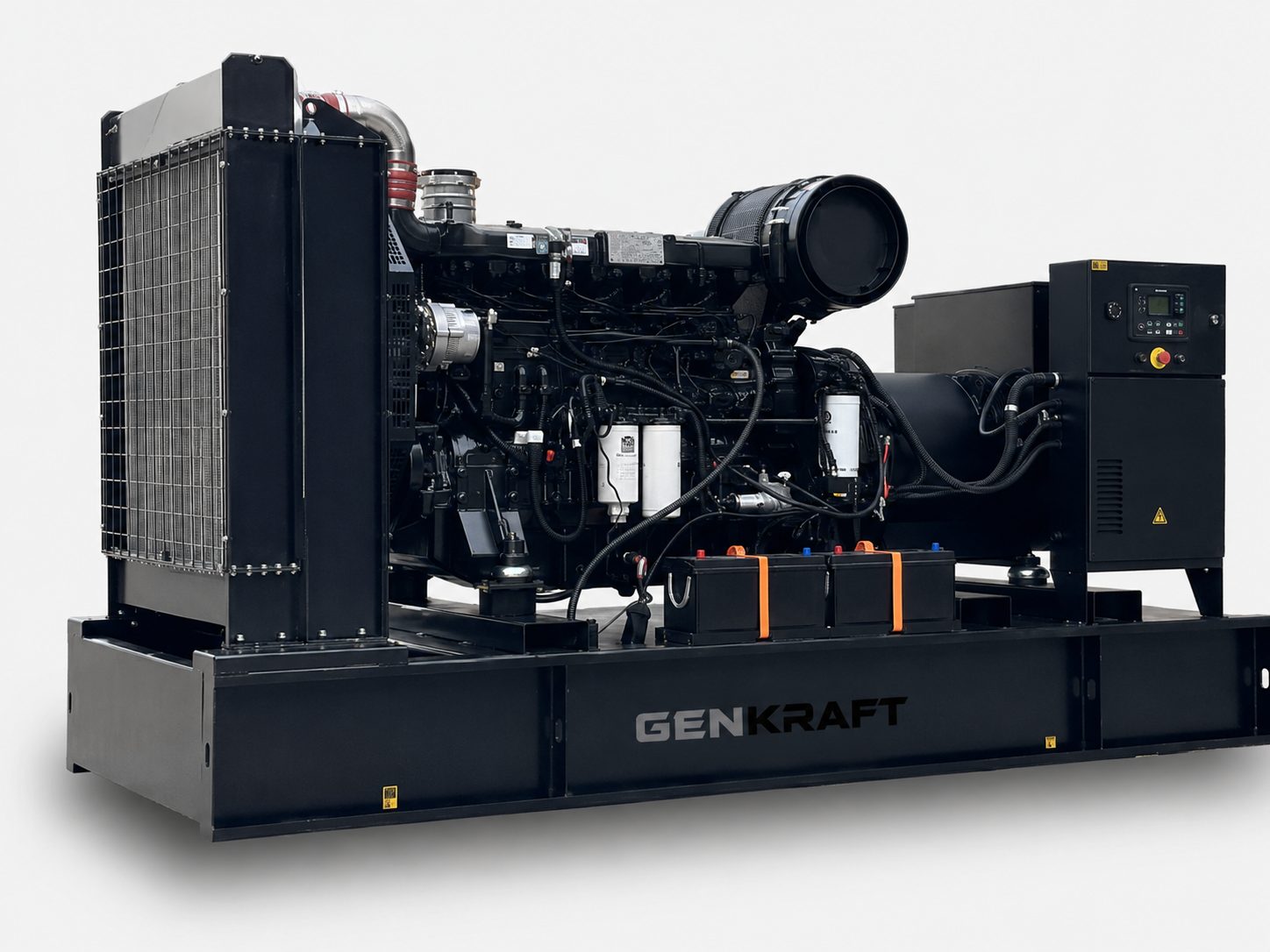
Most no-start events trace back to neglected basics: a flat battery, stale or contaminated fuel, a blocked filter, low coolant. The set that sits untouched for months is the one most likely to let you down at the worst moment.