
Installing a generator: siting, ventilation, and commissioning
Where the set goes
A generator needs a stable, level base that can carry its weight and contain any fuel or oil. Outdoors in a weatherproof canopy or indoors in a dedicated room both work, as long as there is room around the set for airflow, service access and safe exhaust routing. Keep it clear of windows, air intakes and occupied spaces that exhaust fumes could reach.
Air, cooling and exhaust
A diesel engine needs a large volume of air to breathe and to carry heat away. Indoor rooms need generous inlet and outlet openings sized to the set, not an afterthought vent. Exhaust has to be routed outside, away from people and intakes, with the right pipe size so back pressure stays within limits. Get this wrong and the engine overheats or loses output.
Fuel and connections
A fuel supply sized for the runtime you need, whether a base tank or an external tank with the right transfer arrangement. Cabling and protection rated for the set's output, run to the transfer switch and the load. An automatic transfer switch (ATS) if the set must start and take load on its own. Earthing and protection to the applicable electrical standards. Access for refuelling, oil and filter changes, and general service.
Commissioning is not optional
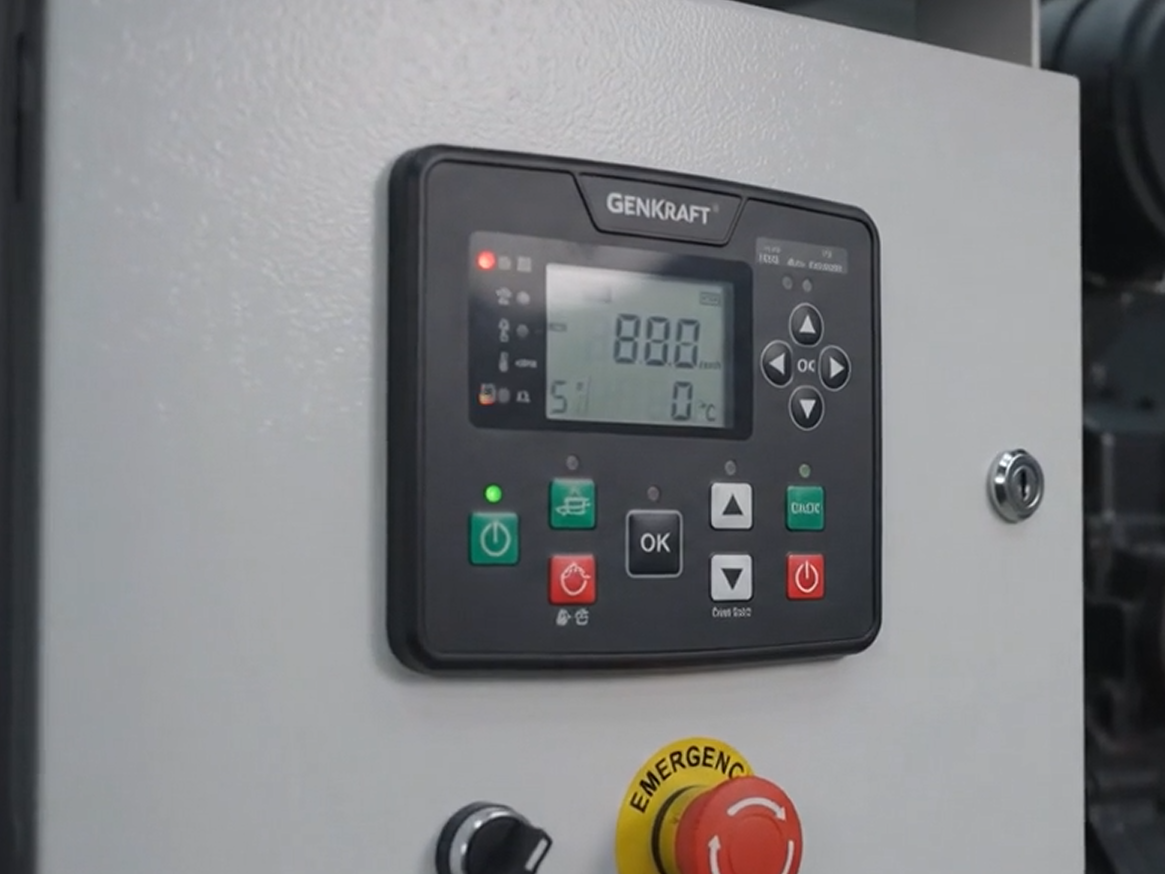
Before a set is trusted, it should be started, run under load and tested against a real mains-failure sequence, so the transfer, the pickup and the shutdown all behave as designed. GENKRAFT commissions its premium and standard sets on site, so the first real outage is not the first real test.