
Reading a generator spec sheet: kVA, kW, engines and alternators
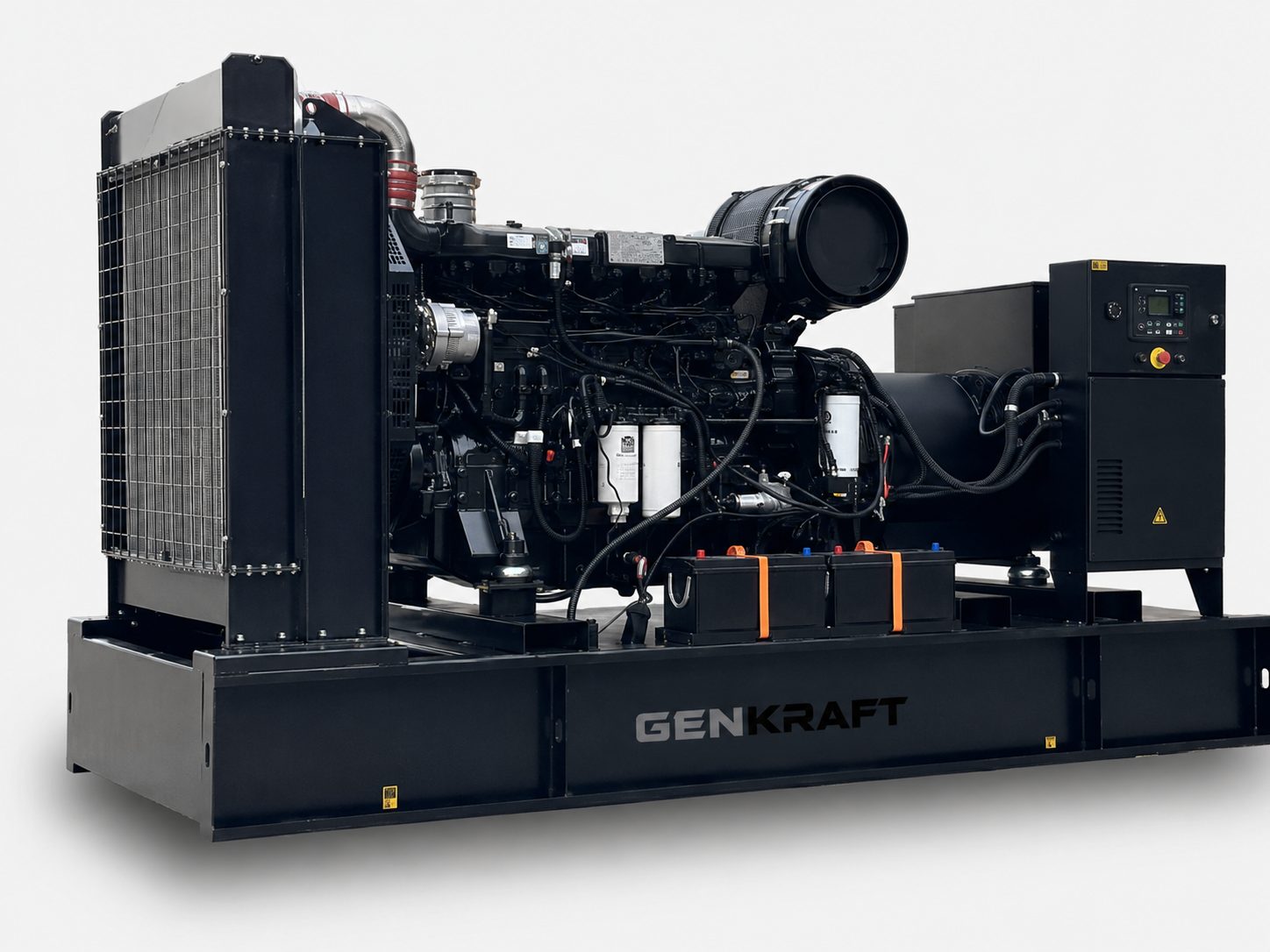
kVA and kW are not the same thing
kVA is apparent power and kW is real, usable power. They are linked by the power factor, typically 0.8 for a genset, so an 800 kVA set delivers roughly 640 kW. Always size to the kW your load actually draws, not to the larger kVA headline.
The engine and the alternator
The engine, for example a Cummins, Perkins, Kubota, Doosan or SDEC unit, sets the mechanical reliability and the strength of the service network behind it. The alternator turns that mechanical power into clean electrical output. Both matter: a strong engine paired with a weak alternator still makes a weak set.
The rest of the plate
Rating: standby, prime or continuous. Voltage and frequency (in Europe, usually 400 and 230 V at 50 Hz). Control and transfer, including an ATS for automatic start. Enclosure and sound level. Emissions compliance, keeping in mind that stationary and mobile sets fall under different EU rules, so the set has to match where and how you will use it.
What to actually compare
Compare sets on usable kW at the correct rating, on engine and alternator quality, and on the total support behind them, rather than on the headline kVA alone. GENKRAFT specifies both its premium and standard sets on that basis.